FDM 3D printers work with thermoplastic filaments — spooled wire that is melted in the print head and deposited layer by layer. Choosing the right filament material affects not just the print process itself, but the mechanical properties of the finished object: its flexibility, heat resistance, surface finish, and durability.
Three materials cover the majority of beginner and intermediate use cases: PLA, PETG, and ABS. Each has distinct characteristics, temperature requirements, and appropriate applications.
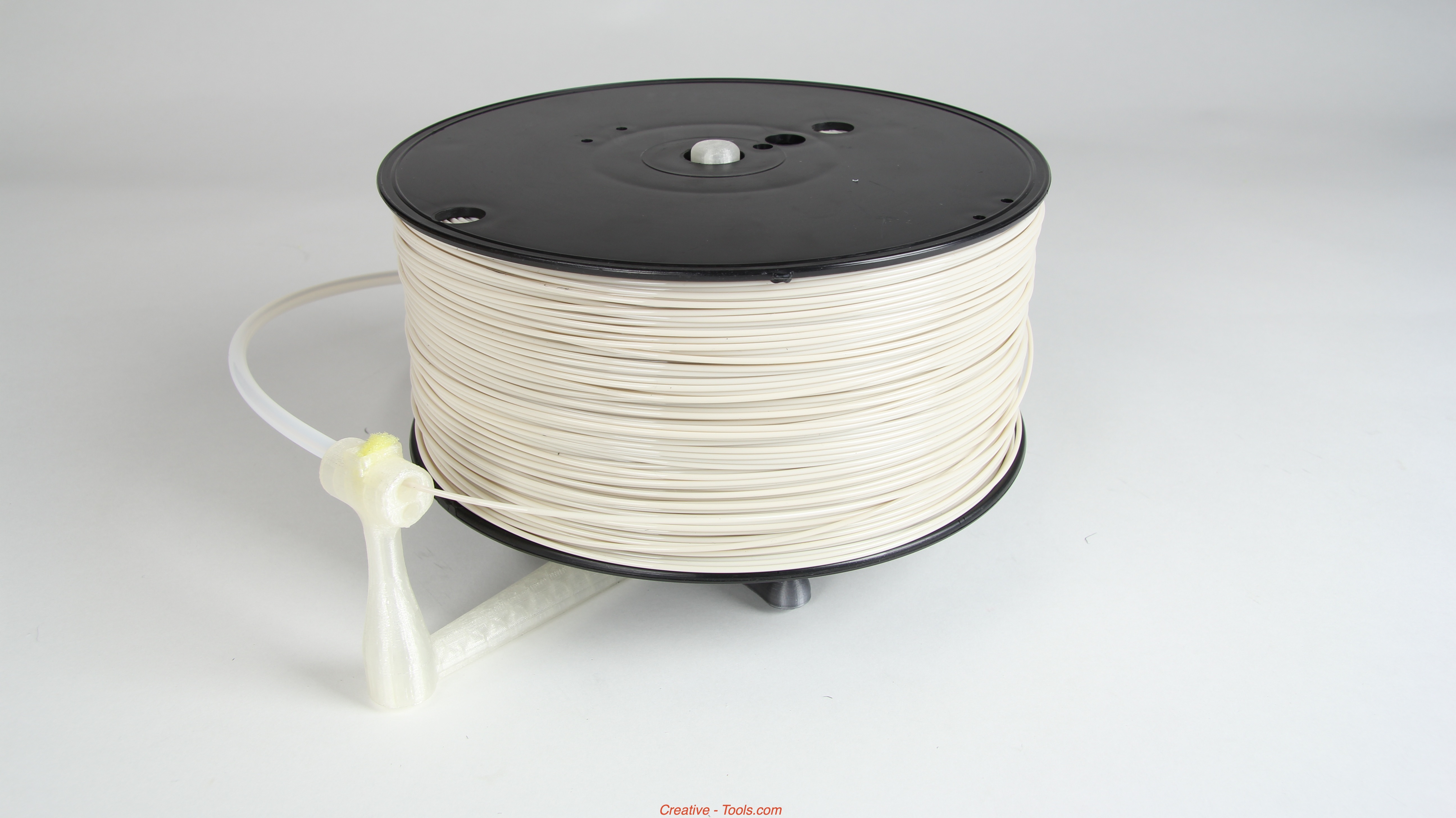
PLA (Polylactic Acid)
PLA is the most widely used FDM filament material for beginners. It is derived from renewable sources (typically corn starch or sugarcane) and is biodegradable under industrial composting conditions. For practical purposes, PLA is the easiest material to print with and the most widely stocked in Polish suppliers.
Print settings (typical ranges)
Properties
- Rigid and relatively brittle — not suitable for parts subject to impact or flexing
- Low heat resistance — objects may soften at temperatures above approximately 60 °C, making PLA unsuitable for items left in a car in summer
- Good surface detail and print reliability
- Bonds well to PEI, glass, and blue painter's tape surfaces
- Low odour during printing compared to ABS
Typical uses
PLA is appropriate for decorative objects, enclosures, holder organizers, prototypes, and anything that does not need to withstand mechanical stress, high temperature, or outdoor UV exposure. It is the standard material for first prints and calibration tests.
PLA filament is widely available in Poland from distributors including Fiberlogy (based in Nowa Sól), Devil Design, and international brands. Fiberlogy is a notable Polish manufacturer with a broad colour range and documented material specifications.
PETG (Polyethylene Terephthalate Glycol)
PETG is a glycol-modified variant of PET, the same material used in plastic bottles. It combines easier printability than standard PET with better heat and chemical resistance than PLA. PETG has become a common second material for FDM users who need more durability than PLA provides.
Print settings (typical ranges)
Properties
- Higher impact resistance than PLA; less brittle
- Heat resistance to approximately 80 °C depending on formulation
- Slight flexibility compared to PLA
- Some hygroscopic tendency — absorbs moisture from air, which can cause printing artefacts if the spool is left open
- Tends to string between features if retraction settings are not tuned
- Generally food-contact safe when printed cleanly, though the layer structure creates porous surfaces that are difficult to sanitise
Typical uses
PETG is suited to functional parts: brackets, mechanical components, outdoor-use items, and any print that will experience physical stress during use. Its chemical resistance also makes it suitable for laboratory fixtures where mild chemicals are present.

ABS (Acrylonitrile Butadiene Styrene)
ABS was one of the first widely used FDM filament materials, partly because early FDM patents (held by Stratasys until 2009) used ABS as the primary material. It produces durable, slightly flexible parts with good heat resistance, but it is significantly more demanding to print with than PLA or PETG.
Print settings (typical ranges)
Properties
- Good heat resistance — typically 90–100 °C before deformation
- Tougher and less brittle than PLA
- Significant warping tendency without an enclosure and heated bed
- Emits styrene fumes during printing — adequate ventilation is required
- Soluble in acetone, enabling acetone vapour smoothing for improved surface finish
Typical uses
ABS is used for parts that will be exposed to moderate heat (automotive interiors, outdoor fixtures in warm climates), mechanical components that need impact resistance, or objects intended to be acetone-smoothed for a near-injection-moulded surface.
For most beginners, ABS is not the recommended starting point. The warping issues require a printer with an enclosure and a well-tuned heated bed, and the fumes necessitate proper ventilation — conditions that are difficult to meet in a standard apartment. PETG provides a significant portion of ABS's benefits without the same printing difficulty.
Filament Storage
All three materials — PLA, PETG, and ABS — are hygroscopic to some degree. Moisture absorbed from the air degrades print quality, causing bubbling, rough surface texture, and inconsistent extrusion. PETG is the most sensitive of the three.
- Store opened spools in sealed containers or zip bags with desiccant
- Silica gel packets (rechargeable) are a common and inexpensive solution
- Dry wet filament in a food dehydrator or purpose-built filament dryer at appropriate temperatures before printing (typically 45–65 °C for PLA, slightly higher for PETG and ABS)
Summary Table
| Property | PLA | PETG | ABS |
|---|---|---|---|
| Difficulty to print | Low | Moderate | High |
| Heat resistance | Low (~60 °C) | Moderate (~80 °C) | Good (~95 °C) |
| Impact resistance | Low | Moderate | Moderate–High |
| Warping tendency | Minimal | Low | High |
| Enclosure required | No | No (optional) | Yes (recommended) |
| Ventilation needed | Recommended | Recommended | Required |
| Moisture sensitivity | Low | High | Moderate |
Related reading:
FDM vs Resin: Choosing Your First 3D Printer
Your First 3D Print: Slicer Setup and Beginner Projects
External references:
All3DP — Filament Types Guide
Prusa Research — Materials Guide