FDM vs Resin: Choosing Your First 3D Printer
A comparison of Fused Deposition Modeling and photopolymer resin printing — how each works, what they produce, and which suits different starting points.
Read article →A practical introduction to FDM and resin printing technologies, filament properties, slicer configuration, and beginner-friendly projects — with context relevant to makers in Poland.
Articles
Three structured guides covering the two main desktop 3D printing methods, the most common filament materials, and a step-by-step walkthrough for preparing and running your first print.
A comparison of Fused Deposition Modeling and photopolymer resin printing — how each works, what they produce, and which suits different starting points.
Read article →
Properties, print temperatures, and practical uses for the three most common FDM filament types — including storage and handling notes.
Read article →
How to configure a slicer, choose beginner-appropriate models, and run a successful first print — with notes on what commonly goes wrong.
Read article →What You Will Find Here
How fused deposition modeling works, nozzle temperatures, layer height, and common printer types available in the Polish market.
Photopolymer printing basics, exposure settings, post-curing, and workspace safety requirements when working with liquid resin.
PLA, PETG, and ABS — their mechanical properties, print temperature ranges, and which applications each material is suited for.
An overview of PrusaSlicer, Cura, and Bambu Studio — what settings matter most for beginners and how to approach first-print configuration.
Practical, widely-available model suggestions from Printables and Thingiverse that demonstrate core printer capabilities without demanding advanced settings.
Notes on where to source filament, which printer brands have local support in Poland, and relevant maker communities.
How It Works
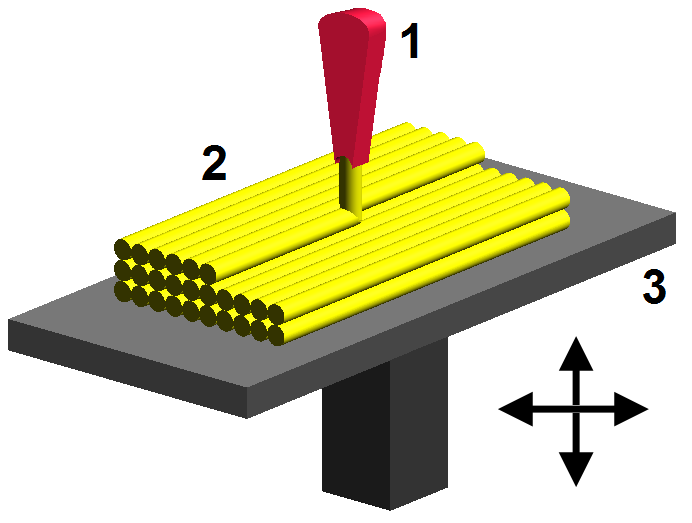
Fused Deposition Modeling extrudes a thermoplastic filament through a heated nozzle, depositing material layer by layer onto a build platform. The process is repeatable, the materials are broadly available, and the machines are the most common entry point for new makers.
Fused Deposition Modeling — schematic of extruder, filament, and build platform. Source: Wikimedia Commons / Zureks (CC BY-SA)
Each print is built from a series of horizontal layers. Layer height — typically 0.1 mm to 0.3 mm — directly affects surface detail and print time.
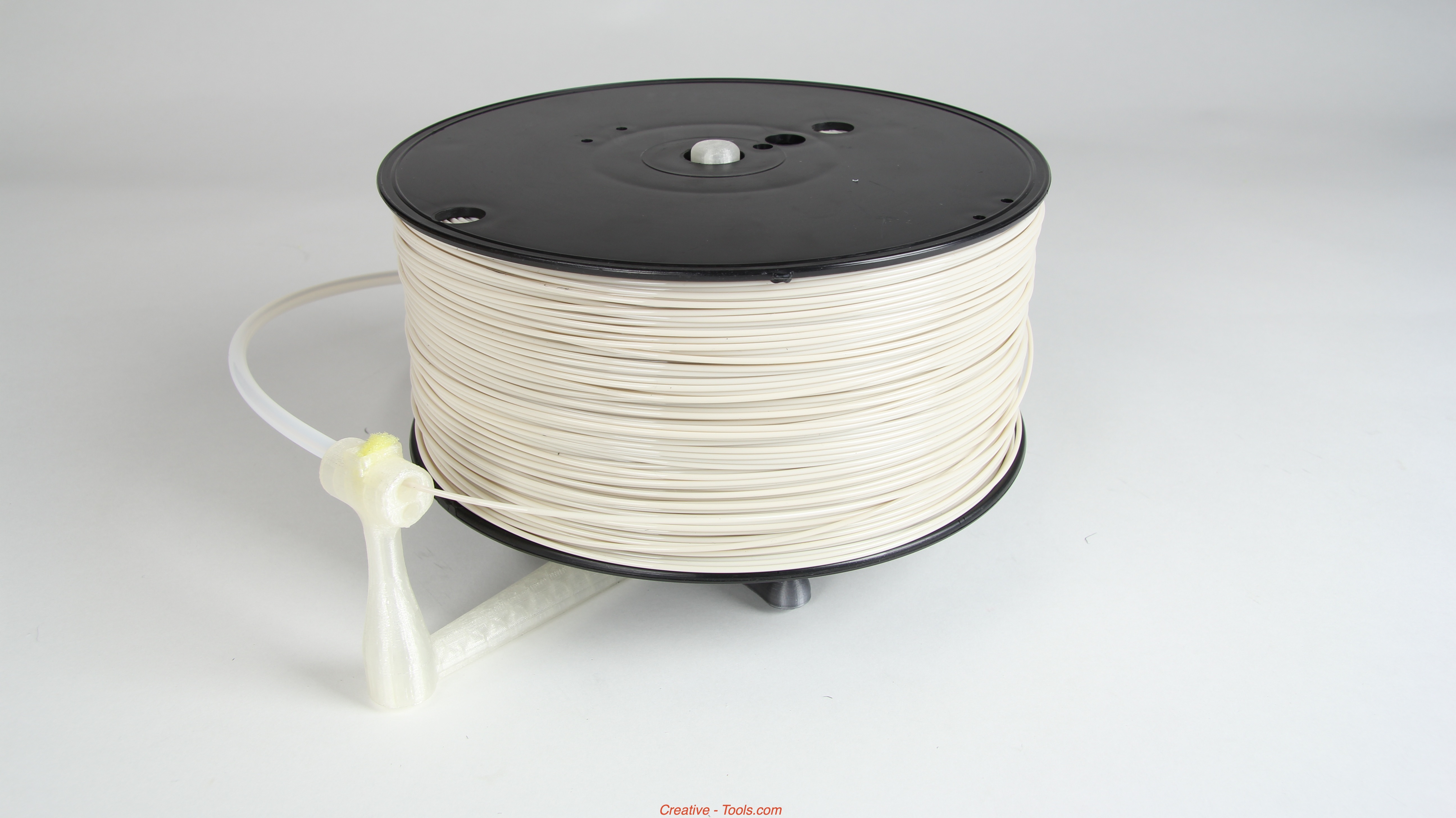
PLA, PETG, and ABS are the three most common filaments. Each has a different temperature requirement, flexibility, and durability profile.
Many FDM printers — including the Prusa i3 series manufactured in Prague — are based on open hardware and supported by an active global community.
Contact
This site provides informational content about 3D printing for beginners. For corrections, suggestions, or general enquiries, use the form or the contact details below.